

Content SEO
- Content SEO (200 Words)
- Content SEO is the process of creating and optimizing website content so it ranks higher on search engines like Google and attracts the right audience. It combines quality writing with SEO techniques such as keyword usage, internal linking, proper headings, and user-focused information. The main goal of Content SEO is to improve visibility, increase organic traffic, and provide valuable content that solves users’ problems.
- Good SEO content is informative, engaging, and easy to read. Search engines analyze factors like keyword relevance, content structure, readability, and user experience before ranking pages. That’s why businesses focus on creating blogs, landing pages, guides, and articles optimized for both users and search engines.
- Content SEO also includes optimizing title tags, meta descriptions, images, and URLs. Using keywords naturally in headings and paragraphs helps search engines understand the topic of the page. High-quality content builds trust, keeps visitors on the site longer, and increases conversion rates.
- In 2026, Content SEO has become more important because search engines prioritize helpful and original content. Websites with strong SEO content strategies can improve rankings, build authority, and grow their online presence effectively.
SEO Content Writing
- SEO Content Writing is the practice of writing content that is optimized for search engines while remaining useful and engaging for readers. It helps websites rank higher on search engine results pages and attract organic traffic. SEO content writing involves researching keywords, understanding user intent, and creating high-quality content around those topics.
- A well-written SEO article includes proper headings, keywords, meta descriptions, internal links, and readable formatting. The content should answer users’ questions clearly and provide valuable information. Search engines favor content that is informative, original, and easy to understand.
- SEO writers focus on balancing keyword optimization with natural writing. Keyword stuffing is avoided because search engines now prioritize user experience over excessive keyword usage. Instead, keywords are placed strategically in titles, headings, introductions, and throughout the content naturally.
- Good SEO content writing also improves engagement metrics such as time on page and bounce rate. Blogs, service pages, product descriptions, and website content all benefit from SEO writing techniques.
- In 2026, AI-driven search algorithms emphasize helpful and trustworthy content. Businesses that invest in SEO content writing can improve visibility, generate leads, and establish authority in their industry while connecting effectively with their target audience.
Blog Optimization
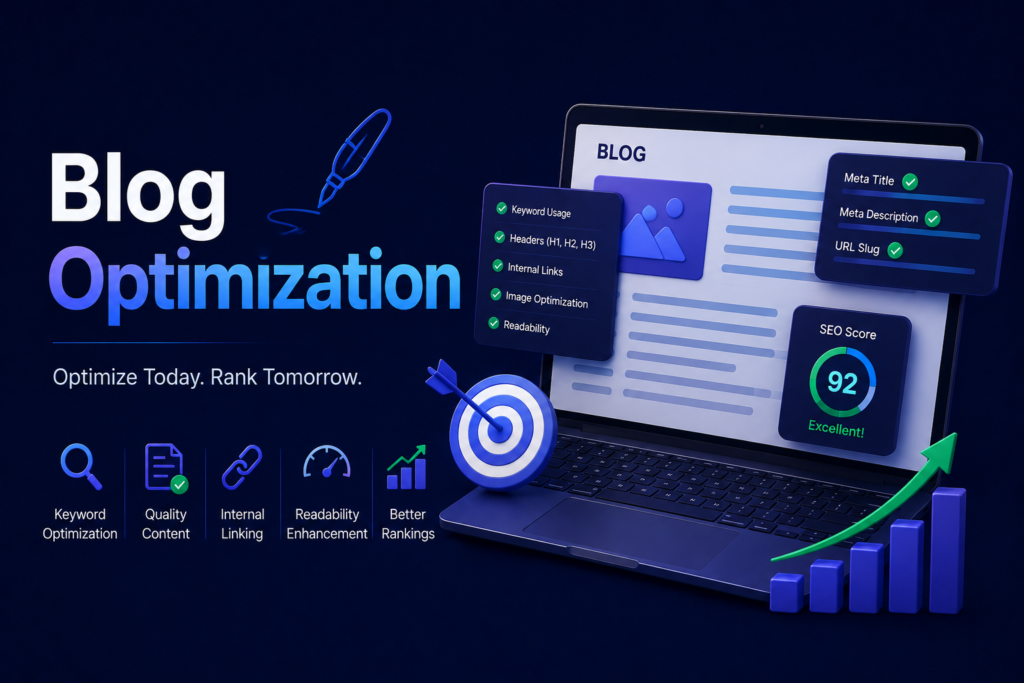
- Blog Optimization is the process of improving blog content so it performs better in search engines and provides a better experience for readers. Optimized blogs can attract more organic traffic, increase engagement, and improve website authority. It involves both technical SEO and content-related improvements.
- The first step in blog optimization is keyword research. Choosing relevant keywords helps search engines understand the blog topic. Keywords should be placed naturally in titles, headings, URLs, image alt text, and throughout the content. A compelling meta title and description also improve click-through rates.
- Formatting plays an important role in optimization. Using H1, H2, and H3 headings, short paragraphs, bullet points, and images makes blogs easier to read. Internal linking helps visitors navigate the website and improves SEO performance.
- Page speed, mobile responsiveness, and image compression are also important for blog optimization. Search engines prioritize websites that provide a fast and smooth user experience.
- Updating old blogs with fresh information, new keywords, and improved structure can increase rankings and traffic. In 2026, optimized blogs are essential for digital marketing because they help businesses build trust, improve visibility, and attract potential customers through valuable and searchable content

Content Strategy
- A Content Strategy is a planned approach to creating, publishing, and managing content to achieve specific business goals. It helps businesses deliver the right content to the right audience at the right time. A strong content strategy improves brand awareness, SEO performance, audience engagement, and lead generation.
- The first step in content strategy is understanding the target audience. Businesses analyze customer interests, problems, and search behavior to create useful content. Keyword research is also important because it helps identify topics people are searching for online.
- A successful content strategy includes blogs, social media posts, videos, landing pages, email campaigns, and other forms of content. Content calendars are used to maintain consistency and organize publishing schedules. Each piece of content should align with marketing goals and user intent.
- SEO optimization is an important part of content strategy. Proper keyword placement, internal linking, and high-quality writing improve search engine rankings and website traffic. Performance tracking tools help measure engagement, conversions, and content effectiveness.
- In 2026, content strategy is essential for businesses because online competition continues to grow. Brands with a clear content plan can build trust, attract customers, and strengthen their digital presence more effectively than competitors.
Keyword Placement
- Keyword Placement refers to the strategic use of keywords in website content to improve search engine rankings and visibility. Proper keyword placement helps search engines understand the topic of a webpage while also making the content more relevant to users.
- Keywords should be included naturally in important areas such as the page title, meta description, URL, headings, introduction, and conclusion. Placing keywords in H1 and H2 headings helps search engines identify the main focus of the content. However, overusing keywords can negatively impact readability and SEO performance.
- Search engines in 2026 prioritize user-friendly and meaningful content. Therefore, keywords must fit naturally within sentences rather than appearing forced. Using related keywords and semantic phrases also improves content relevance and helps rank for multiple search queries.
- Image optimization is another important factor in keyword placement. Including keywords in image file names and alt text improves accessibility and image search visibility. Internal links with keyword-rich anchor text can further strengthen SEO.
- Effective keyword placement improves organic traffic, increases click-through rates, and enhances the overall user experience. Businesses that use keywords strategically can achieve better rankings and attract more targeted visitors to their websites.
Content Length vs Ranking
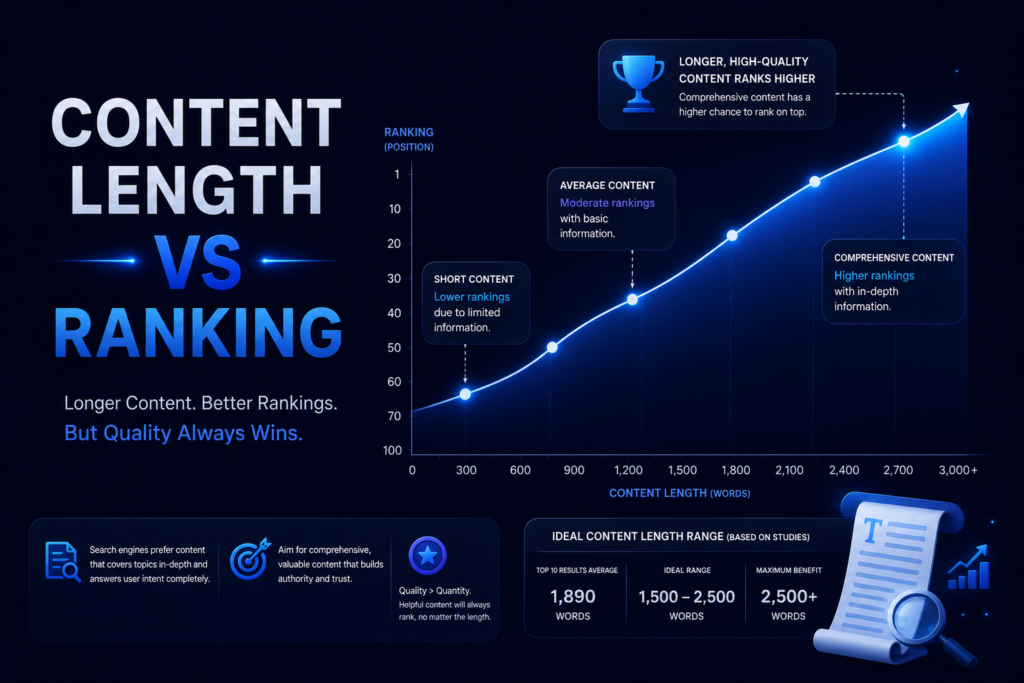
- Content Length vs Ranking is an important topic in SEO because many marketers believe longer content ranks better on search engines. While long-form content often performs well, ranking success depends more on quality, relevance, and user intent than word count alone.
- Longer content usually covers topics in greater detail, which can improve user engagement and increase the chances of ranking for multiple keywords. Comprehensive guides, tutorials, and detailed blogs often perform better because they provide more value to readers. Long content also increases dwell time, which can positively influence SEO performance.
- However, short content can also rank well if it answers the user’s query quickly and effectively. Search engines prioritize helpful and relevant content rather than unnecessary length. Writing long articles filled with repetitive information may harm user experience and increase bounce rates.
- The ideal content length depends on the topic, competition, and search intent. Informational topics may require detailed articles, while product pages or quick-answer blogs may perform better with shorter content.
- In 2026, search engines focus heavily on content quality, expertise, and user satisfaction. Businesses should aim to create valuable, well-structured content instead of focusing only on word count for higher rankings.
Updating Old Content
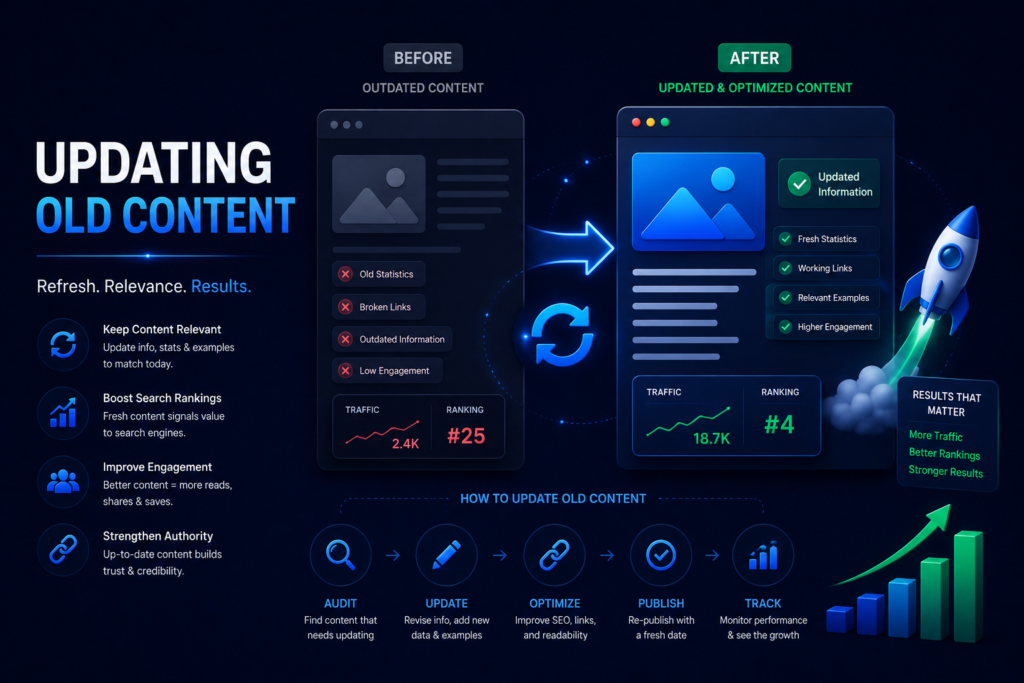
- Updating Old Content is an effective SEO strategy that helps improve search rankings, traffic, and user engagement. Instead of creating new content constantly, businesses can refresh existing pages with updated information, keywords, and improved formatting to maintain relevance.
- Search engines prefer fresh and accurate content. Updating old blog posts with current statistics, trends, examples, and links can improve their visibility in search results. Adding new sections, FAQs, images, or keywords also helps content perform better.
- Content updates may include improving meta titles, descriptions, headings, and internal links. Fixing broken links and optimizing page speed can further enhance SEO performance. Refreshing content ensures users receive accurate and valuable information, which improves trust and user experience.
- Old content with declining traffic can often regain rankings after optimization. Businesses commonly update evergreen articles because they continue attracting visitors over time. Regular content audits help identify pages that need improvement.
- In 2026, updating old content is a smart digital marketing strategy because search engine algorithms prioritize relevance and quality. A well-maintained website with refreshed content can increase organic traffic, improve authority, and generate better long-term SEO results without creating entirely new content constantly.
FAQ – Content SEO
1. What is Content SEO?
Content SEO is the process of optimizing website content to rank higher on search engines and attract organic traffic. It includes keyword usage, quality writing, headings, and internal linking.
2. Why is keyword placement important in SEO?
Proper keyword placement helps search engines understand the topic of a webpage. It also improves visibility and increases chances of ranking for relevant searches.
3. Does longer content rank better on Google?
Longer content can rank better if it provides valuable and detailed information. However, quality and relevance are more important than word count alone.
4. Why should old content be updated?
Updating old content improves freshness, accuracy, and SEO performance. It can help regain rankings, increase traffic, and improve user engagement.
5. What makes a good content strategy?
A good content strategy includes audience research, keyword planning, regular publishing, SEO optimization, and creating helpful content that matches user intent.