
SEO Tools
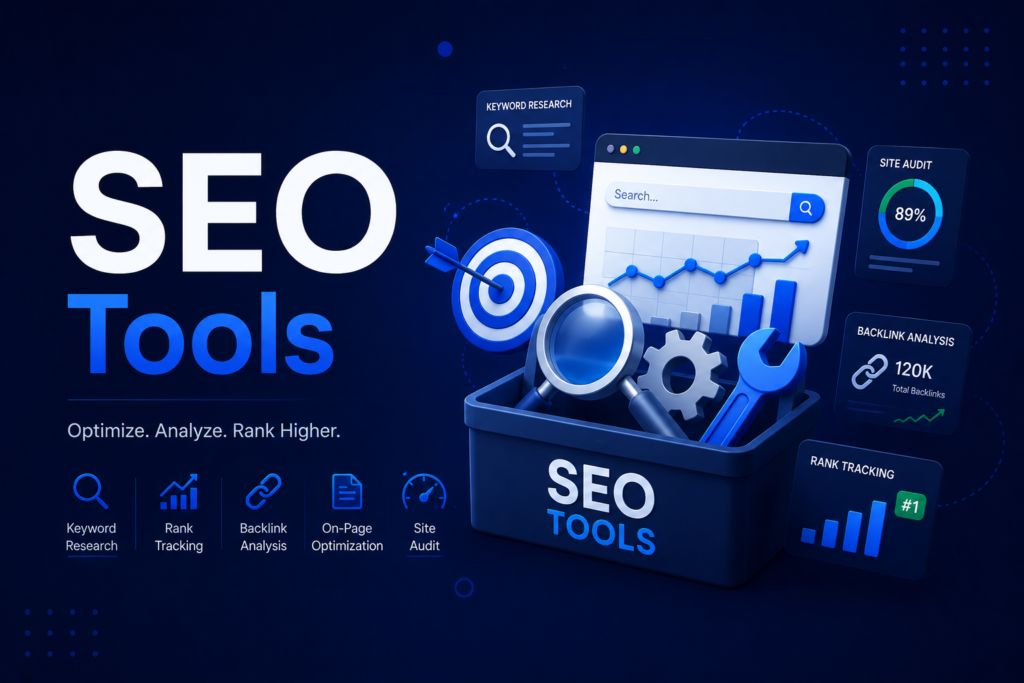
- SEO tools are software platforms that help website owners, marketers, and businesses improve their search engine rankings. These tools provide valuable insights into keywords, backlinks, website performance, technical errors, and competitor strategies. In modern digital marketing, SEO tools play an important role because they save time and help marketers make data-driven decisions.
- There are different types of SEO tools designed for specific tasks. Keyword research tools help identify search terms people use on Google. Site audit tools analyze websites for technical SEO issues such as broken links, slow speed, and missing meta tags. Backlink analysis tools monitor incoming links and evaluate domain authority. Rank tracking tools help businesses measure their keyword positions in search engine results pages (SERPs).
- Popular SEO tools also provide competitor analysis, content optimization suggestions, and traffic insights. By using these tools regularly, businesses can improve their online visibility, increase organic traffic, and attract more potential customers.
- SEO tools are useful for beginners as well as experienced marketers. They simplify complex SEO tasks and help websites follow search engine guidelines effectively. In 2026, SEO tools are considered essential for building a successful online presence and staying ahead in the competitive digital market.
Best SEO Tools List
- There are many SEO tools available that help improve website rankings, keyword research, and technical optimization. Some tools are free, while others offer advanced premium features for professional marketers and agencies.
- One of the most popular tools is Google Search Console, which helps website owners monitor indexing, search performance, and technical issues. Google Analytics is another essential tool for tracking website traffic and user behavior.
- For keyword research, Ahrefs and SEMrush are widely used because they provide keyword difficulty, competitor analysis, and backlink data. Ubersuggest is a beginner-friendly option for finding keyword ideas and SEO suggestions.
- Technical SEO tools like Screaming Frog SEO Spider help audit websites for broken links, duplicate content, and crawl errors. Moz Pro is also popular for domain authority tracking and SEO insights.
- Other useful tools include Yoast SEO for WordPress optimization and Majestic for backlink analysis. Using the right combination of SEO tools can significantly improve website performance and search engine rankings.
How to Use Keyword Tools
- Keyword tools help marketers discover the words and phrases people search for on search engines like Google. Using keyword tools correctly is important for improving website rankings and attracting targeted traffic.
- The first step is entering a topic or seed keyword into a keyword research tool such as Google Keyword Planner, Ahrefs, or SEMrush. The tool then generates related keyword suggestions along with search volume, competition level, and keyword difficulty.
- After finding keyword ideas, users should analyze search intent. Informational keywords are used for learning, while transactional keywords are used when users want to buy a product or service. Choosing the right intent helps create better content.
- Long-tail keywords are often recommended because they have lower competition and attract more targeted visitors. Marketers should also check competitor keywords to understand what terms are driving traffic to competing websites.
- Once the best keywords are selected, they should be naturally placed in titles, meta descriptions, headings, URLs, and website content. Keyword tools should be used regularly because search trends change over time. Proper keyword research helps businesses improve SEO performance and reach the right audience online.
Rank Tracking Tools
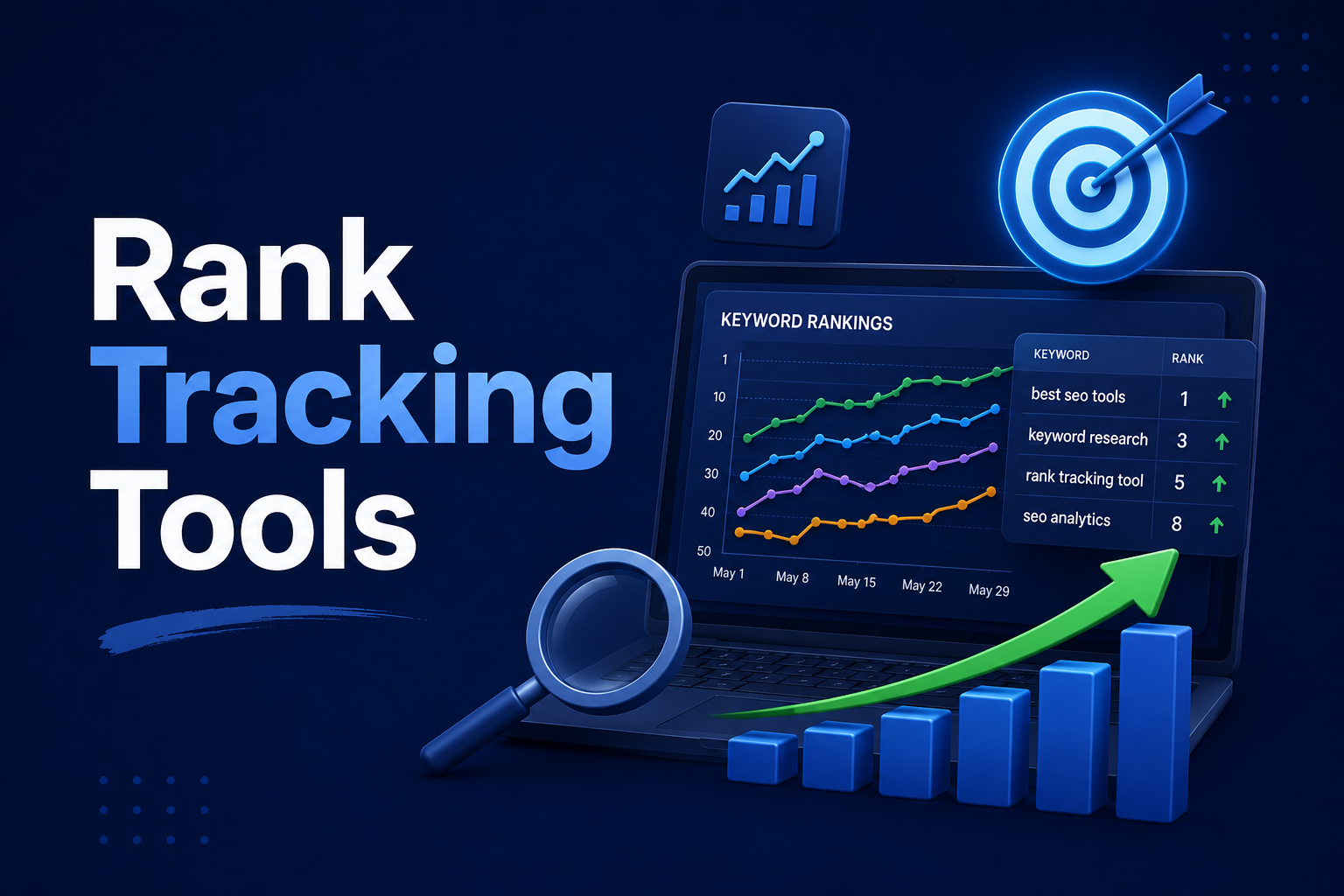
- Rank tracking tools help website owners monitor the position of their keywords in search engine results pages (SERPs). These tools are important because they show whether SEO efforts are improving or declining over time.
- Popular rank tracking tools include SEMrush, Ahrefs, SERPWatcher by Mangools, and AccuRanker. These platforms allow users to track keyword rankings across different locations, devices, and search engines.
- Rank tracking tools provide daily or weekly updates on keyword performance. Users can see which keywords are moving up or down in rankings. This helps marketers understand which SEO strategies are working effectively.
- These tools also offer competitor tracking features. Businesses can compare their rankings with competitors and identify opportunities for improvement. Some advanced tools provide visibility scores, click-through rate estimates, and SERP feature tracking.
- Regular monitoring helps businesses quickly respond to ranking drops caused by algorithm updates or technical SEO issues. By analyzing ranking data, marketers can optimize content, improve backlinks, and update SEO strategies.
- In 2026, rank tracking tools are essential for measuring SEO success and maintaining strong visibility in competitive search results.
Site Audit Tools
- Site audit tools are designed to analyze websites and identify technical SEO problems that may affect search engine rankings. These tools help website owners improve site performance, user experience, and crawlability.
- Popular site audit tools include Screaming Frog SEO Spider, SEMrush Site Audit, Ahrefs Webmaster Tools, and Google Search Console.
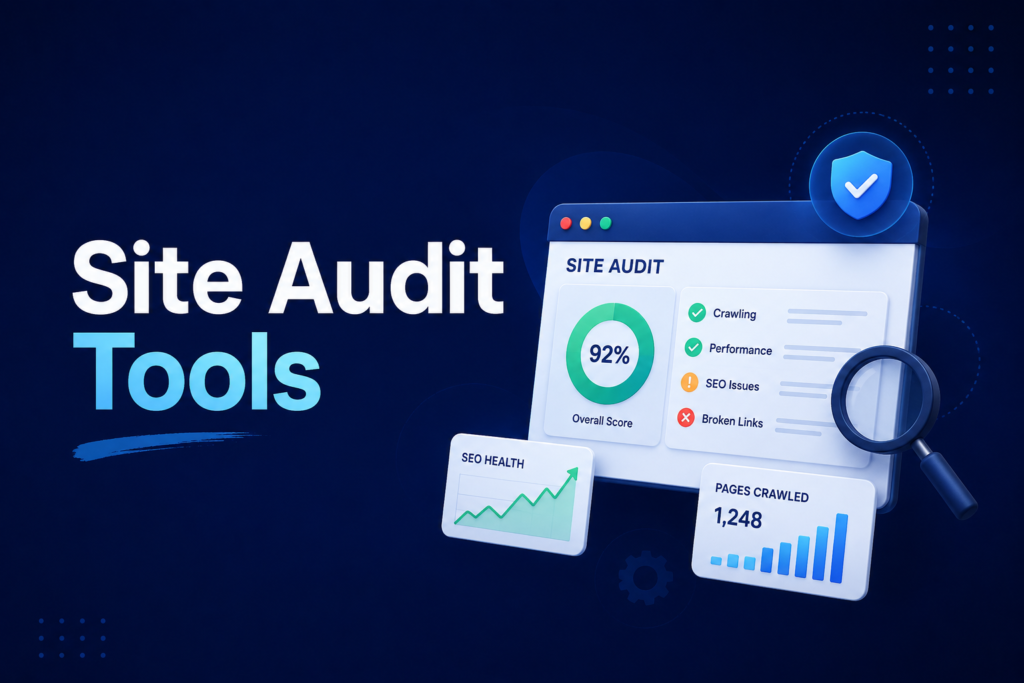
- These tools scan websites to detect issues such as broken links, duplicate content, missing meta tags, slow-loading pages, crawl errors, and mobile usability problems. They also check important SEO elements like XML sitemaps, HTTPS security, structured data, and internal linking.
- Site audit reports usually include an SEO health score that shows the overall condition of a website. The tools also provide recommendations for fixing detected issues. Regular website audits help businesses maintain good technical SEO practices and prevent ranking losses.
- Technical SEO problems can negatively impact user experience and search engine indexing. By fixing these errors quickly, websites can improve performance, loading speed, and search visibility.
- In 2026, site audit tools are considered essential for maintaining a healthy, optimized, and search-engine-friendly website.
Backlink Analysis Tools
- Backlink analysis tools help website owners examine the links pointing to their websites. Backlinks are important in SEO because search engines consider them as signals of trust, authority, and relevance.
- Popular backlink analysis tools include Ahrefs, Majestic, Moz Link Explorer, and SEMrush Backlink Analytics. These tools provide detailed information about referring domains, anchor text, link quality, and domain authority.
- Backlink tools help marketers identify high-quality backlinks and toxic links that may harm SEO performance. They also allow users to monitor competitor backlink profiles and discover new link-building opportunities.
- By analyzing backlink data, businesses can understand which websites are linking to them and which pages attract the most backlinks. This information helps improve content strategy and outreach campaigns.
- Many backlink analysis tools also track lost and newly gained backlinks. Monitoring changes regularly helps businesses maintain a strong link profile and protect their search rankings.
- In 2026, backlink analysis remains one of the most important parts of SEO. Using backlink tools effectively can improve website authority, increase organic traffic, and strengthen overall search engine performance.
SEO Tools- FAQ
1. What are SEO tools used for?
SEO tools are used to improve website rankings, find keywords, analyze backlinks, track keyword positions, and fix technical SEO issues.
2. Which is the best SEO tool for beginners?
Tools like Ubersuggest and Google Search Console are beginner-friendly and easy to use for basic SEO tasks.
3. Why is keyword research important in SEO?
Keyword research helps businesses understand what users search for online, making it easier to create content that attracts targeted traffic.
4. What do rank tracking tools do?
Rank tracking tools monitor keyword positions in search engines and help measure the success of SEO strategies over time.
5. Why are backlink analysis and site audit tools important?
Backlink tools help improve website authority by analyzing links, while site audit tools identify technical SEO problems that may affect rankings and performance.