
Search Engine Optimization (SEO)
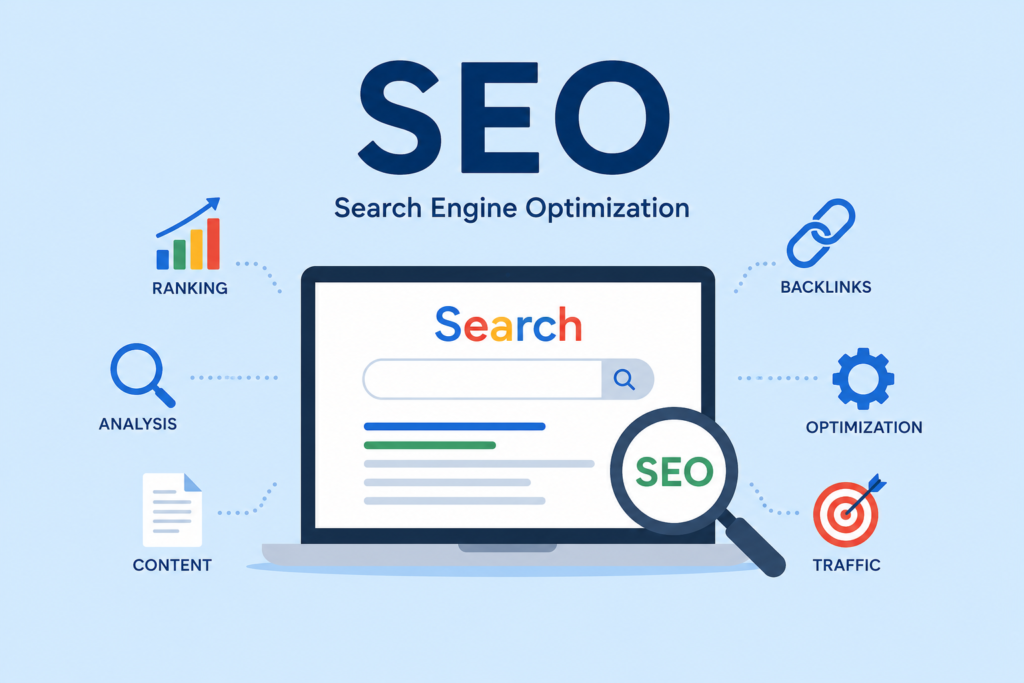
- SEO stands for Search Engine Optimization. It is the process of improving a website so it can rank higher on search engines like Google, Bing, and Yahoo. The main goal of SEO is to increase website visibility and attract more organic (free) traffic from search engines.
- When people search for products, services, or information online, search engines show the most relevant websites on the results page. SEO helps your website appear in those top results. It involves different techniques such as keyword research, content optimization, website speed improvement, link building, and mobile-friendly design.
- SEO is mainly divided into three parts: On-Page SEO, Off-Page SEO, and Technical SEO. On-Page SEO focuses on optimizing content, titles, images, and keywords on a website. Off-Page SEO includes activities like backlink building and social sharing. Technical SEO improves website performance, speed, security, and indexing.
- SEO is important because it helps businesses grow online, build trust, increase traffic, and generate leads or sales without paying for ads. A well-optimized website can reach more customers and improve brand awareness. In today’s digital world, SEO has become an essential part of online marketing success.
How Search Engines Work
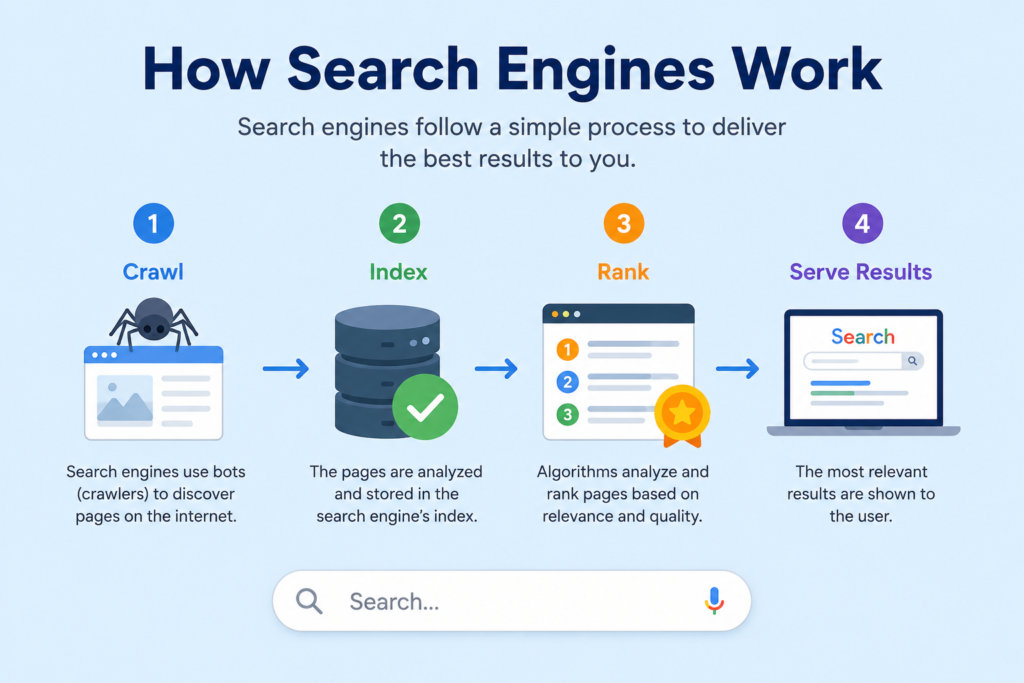
- Search engines like Google and Bing help users find information on the internet quickly and easily. They work through three main processes: crawling, indexing, and ranking.
- First, search engines use automated bots called “crawlers” or “spiders” to scan websites across the internet. These bots visit web pages, read the content, and follow links from one page to another. This process is known as crawling.
- After crawling, the search engine stores and organizes the collected information in a massive database called an index. This step is called indexing. During indexing, search engines analyze the page content, keywords, images, headings, and overall structure to understand what the page is about.
- Finally, when a user searches for something, the search engine checks its index and displays the most relevant results. This process is called ranking. Search engines use complex algorithms to decide which pages should appear first. Factors like content quality, keywords, backlinks, website speed, mobile-friendliness, and user experience all affect rankings.
- The main goal of search engines is to provide users with accurate, useful, and high-quality information in the shortest possible time.
Types of SEO (On-Page, Off-Page, Technical)
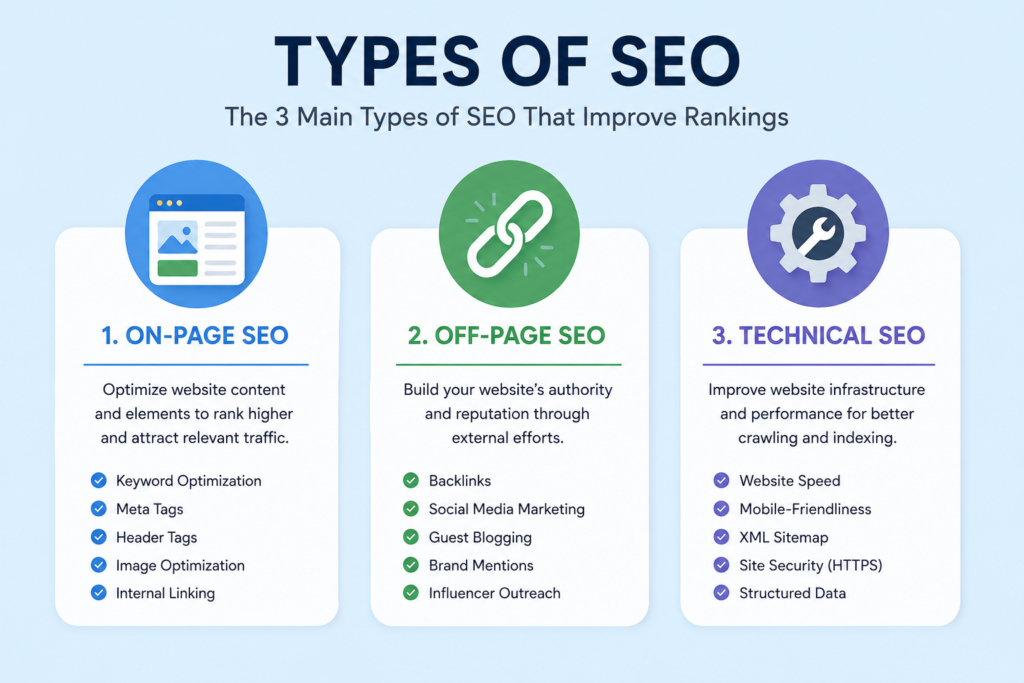
- SEO is mainly divided into three types: On-Page SEO, Off-Page SEO, and Technical SEO. Each type plays an important role in improving a website’s visibility and ranking on search engines like Google.
- On-Page SEO
- On-Page SEO focuses on optimizing the content and elements within a website. It includes using relevant keywords, writing quality content, optimizing title tags, meta descriptions, headings, images, and internal links. The goal of On-Page SEO is to make web pages more useful and understandable for both users and search engines.
- Off-Page SEO
- Off-Page SEO refers to activities done outside the website to improve its authority and reputation. The most important part of Off-Page SEO is link building, where other websites link back to your site. Social media sharing, guest posting, influencer marketing, and online mentions also help improve rankings and trust.
- Technical SEO
- Technical SEO focuses on improving the technical performance of a website. It includes website speed optimization, mobile-friendliness, secure HTTPS connection, XML sitemaps, crawlability, and fixing broken links or errors. Technical SEO helps search engines crawl and index a website properly.
- Together, these three types of SEO help websites rank higher, increase traffic, and improve online visibility.
Importance of SEO in 2026
- SEO continues to be one of the most important digital marketing strategies in 2026. As more businesses move online, competition on search engines like Google and Bing is increasing rapidly. SEO helps websites improve their visibility, attract targeted traffic, and grow their online presence without relying only on paid advertisements.
- In 2026, users expect fast, mobile-friendly, and high-quality websites. Search engines now focus more on user experience, content quality, website speed, and trustworthiness. A well-optimized website can rank higher in search results and reach potential customers more effectively.
- SEO is also important for building brand credibility and long-term growth. Most users trust websites that appear on the first page of search results. Higher rankings increase brand awareness, website traffic, leads, and sales. Unlike paid ads, SEO provides long-lasting results and better return on investment over time.
- With the rise of AI search, voice search, and smart devices, SEO strategies are becoming more advanced. Businesses now need optimized content, structured data, and strong technical SEO to stay competitive. Local SEO is also growing because people frequently search for nearby services and businesses online.
- Overall, SEO in 2026 is essential for businesses that want sustainable online growth, visibility, and success in the digital world
SEO vs Paid Ads
- SEO and Paid Ads are two popular digital marketing strategies used to increase website traffic and online visibility. Both help businesses reach potential customers, but they work in different ways.
- SEO, or Search Engine Optimization, focuses on improving a website’s organic ranking on search engines like Google. It involves optimizing content, keywords, website speed, backlinks, and user experience. SEO takes time to show results, but the traffic is free and long-lasting. Once a website ranks well, it can continue to attract visitors without paying for every click.
- Paid Ads, also known as PPC (Pay-Per-Click) advertising, allow businesses to appear instantly at the top of search engine results. Platforms like Google Ads and social media ads charge advertisers whenever someone clicks on their ad. Paid ads provide fast results and are useful for promotions, product launches, or quick lead generation. However, traffic stops when the advertising budget ends.
- SEO is best for long-term growth, brand authority, and sustainable traffic, while paid ads are ideal for immediate visibility and quick conversions. Many successful businesses use both strategies together to maximize their online presence. SEO builds trust over time, while paid advertising helps businesses reach targeted audiences quickly and efficiently.
FAQ – SEO Basics
1. What is SEO and why is it important?
SEO (Search Engine Optimization) is the process of improving a website’s visibility on search engines like Google. It helps websites rank higher in search results, increase organic traffic, and attract potential customers without paying for ads.
2. How do search engines work?
Search engines work through three main processes: crawling, indexing, and ranking. They scan websites using bots, store information in their database, and show the most relevant pages to users based on keywords and content quality.
3. What are the main types of SEO?
The three main types of SEO are On-Page SEO, Off-Page SEO, and Technical SEO. On-Page focuses on content and keywords, Off-Page improves authority through backlinks, and Technical SEO enhances website performance and indexing.
4. Why is SEO important in 2026?
SEO is important in 2026 because online competition is growing rapidly. Businesses need SEO to improve visibility, build trust, increase website traffic, and reach customers through search engines and AI-powered search results.
5. What is the difference between SEO and Paid Ads?
SEO generates free organic traffic over time, while Paid Ads bring instant traffic through advertising campaigns. SEO is long-term and cost-effective, whereas Paid Ads require continuous spending for visibility.